Thames guide

Filming on the Thames, sorted: drone rules and permissions

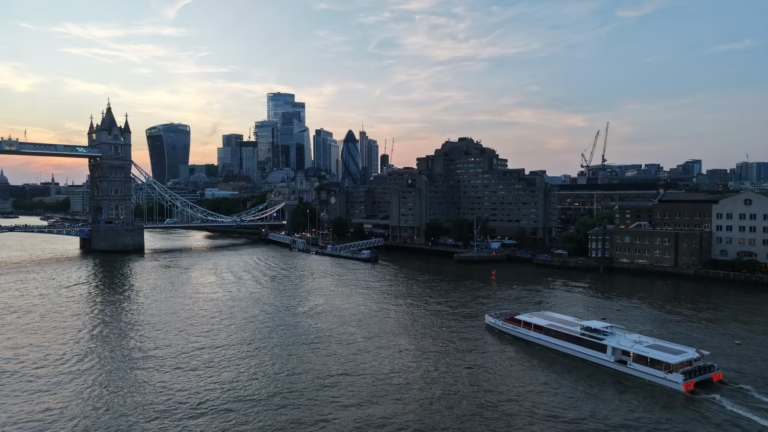
Flying a drone over the Thames for a film or a commercial shoot is possible, but most of the river through central London sits inside protected airspace. Here is where, who gives permission and how we handle it.

At a glance

  • From Putney to Woolwich, almost all of the river sits inside a restricted area or an airport or heliport zone.
  • Inside an airport or heliport zone you need that airport’s or heliport’s permission. Inside the restricted areas R157, R158 and R159 you need permission through NATS.
  • A drone flown from a boat or the foreshore also needs the PLA’s drone application, at least three working days ahead.
  • We fly under a CAA Operational Authorisation and hold long-standing permissions across London, so we can often fly at short notice.

Where the zones are

The map shows the zones along the river, drawn from the official NATS data. Heading downstream:

  • Putney to Battersea: the London Heliport’s flight restriction zone, a circle two nautical miles out from the heliport.
  • Battersea to Westminster and the London Eye: the Hyde Park restricted area (R157). Despite the name it reaches right down to the river, and Battersea Power Station sits inside both.
  • Blackfriars to Tower Bridge: the City of London restricted area (R158), which takes in the Pool of London and HMS Belfast.
  • The Isle of Dogs: its own restricted area (R159).
  • Canary Wharf to Woolwich: London City Airport’s zone, with the O2, the Royal Docks and the Thames Barrier inside it.

A few stretches sit just outside, such as Rotherhithe, St Katharine Docks and Greenwich, and so does the river upstream of Putney. The normal CAA rules still apply there, and a drone filming them can easily cross into the zone next door.
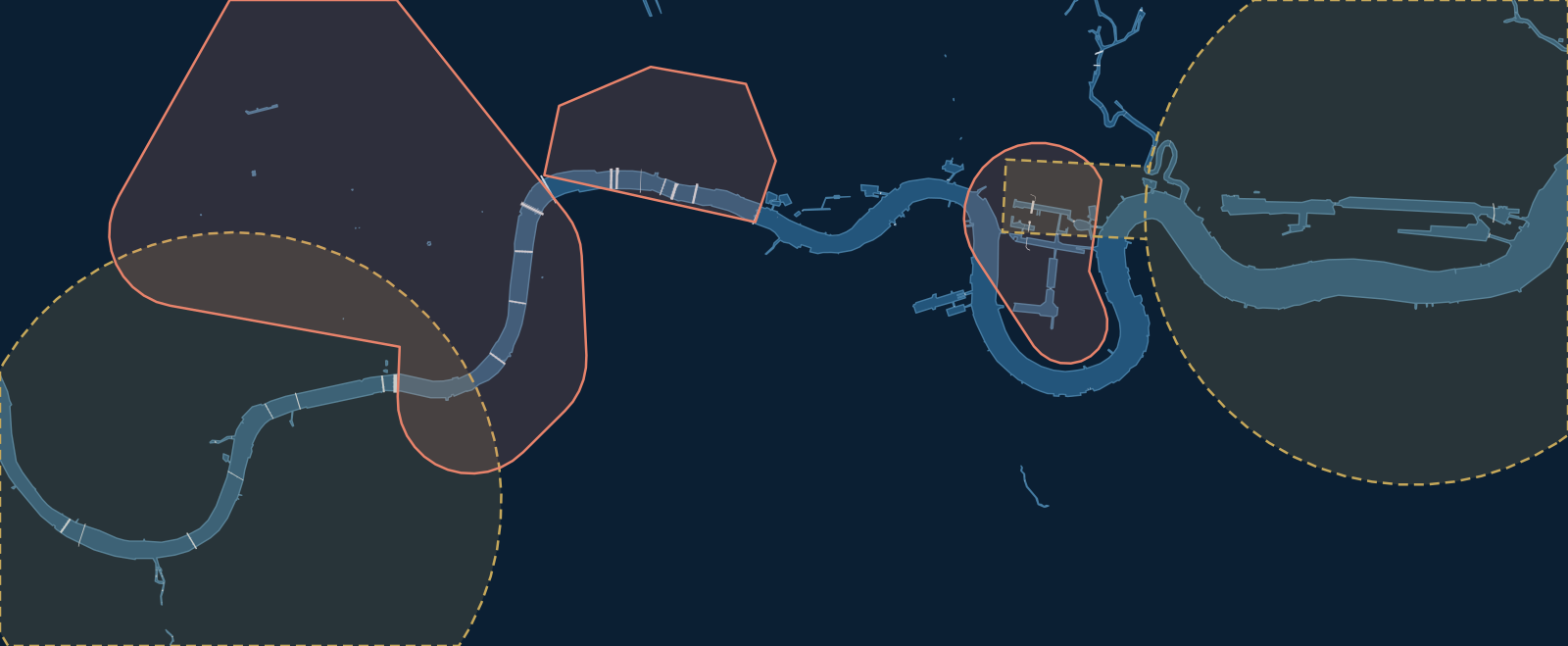
Drone airspace over the Thames from Putney to WoolwichLondon Heliport zoneR157 Hyde ParkR158 City of LondonR159 Isle of DogsLondon City Airport zonePutney BridgeBattersea Power StationWestminsterTower BridgeGreenwichThames BarrierWoolwich
  • Airport and heliport flight restriction zones: permission from the airport or heliport
  • Restricted areas R157, R158 and R159: permission through NATS
Airspace: UK AIP data from NATS, effective 1 Oct 2026. Temporary restrictions are published as NOTAMs. Map data © OpenStreetMap contributors

Who gives permission

  • Airport and heliport zones. London City Airport, or the London Heliport. Their zones are active day and night, and they apply to drones of every size, even the smallest.
  • Restricted areas R157, R158 and R159. An Enhanced Non-Standard Flight application through NATS, then clearance from air traffic control on the day, before take-off.
  • The Port of London Authority. A drone application alongside the filming permit for any take-off or landing on a boat or the foreshore, at least three working days ahead.
  • Landowners. Permission for any take-off spot on land, whether that is a pier, a quay or a park.
  • The CAA. The rules for the flight itself. Commercial work should be flown by an operator with the right authorisation and insurance. Ours runs under a CAA Operational Authorisation.
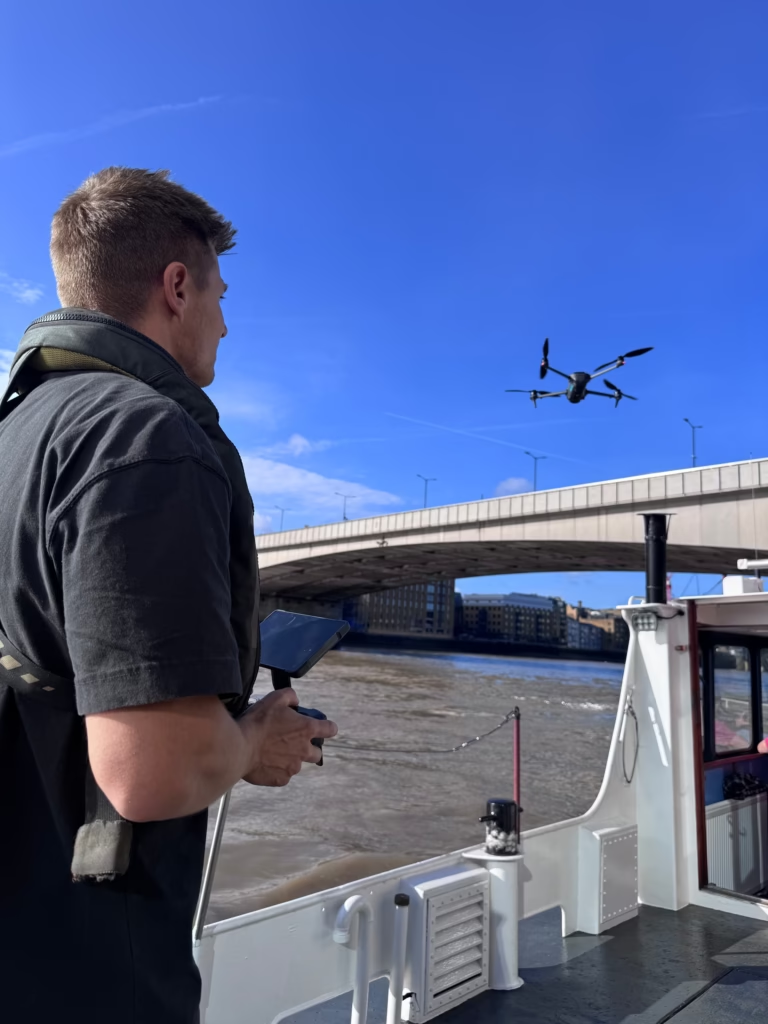
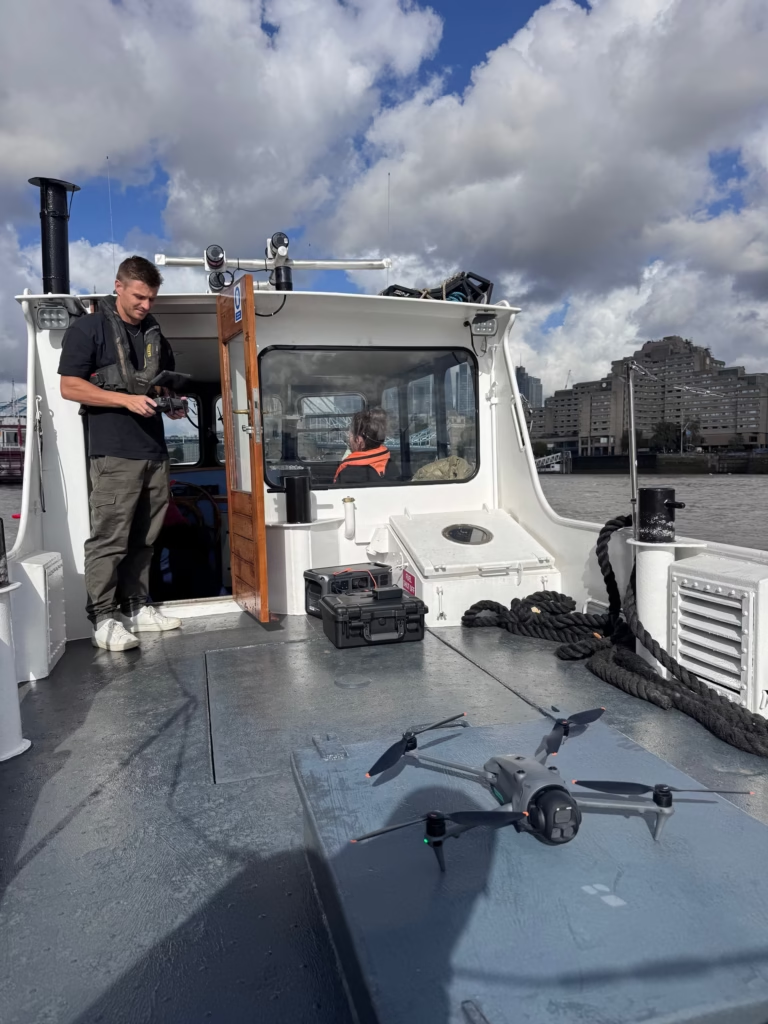
Drone pilot on the aft deck of a boat on the Thames, flying a drone overhead with London Bridge behindDrone ready for take-off on the stern hatch of a boat on the Thames below Tower Bridge
Flying from our aft deck by London Bridge, inside the City of London restricted area, and the drone ready on the stern below Tower Bridge.

How long it takes

Tell us as early as you can. We hold long-standing permissions across London, so we can often fly at short notice. Where a new approval is needed, the earlier we apply, the more room there is for the conditions that come with it.

The PLA’s side runs to its own notice periods, from 10 working days for a small shoot to 6 weeks for multi-drone shows and fireworks between Lambeth and Greenwich. Our permissions guide sets out the whole timeline.

On the day

Inside the zones, the flight is cleared with air traffic control before take-off, and approvals often come with conditions: heights, times and a visual observer beside the pilot. We make the calls, bring the observer and keep the paperwork with the pilot. No clearance, no flight.

Flying from a boat

Launching and recovering from a boat needs a clear deck and a skipper who holds the boat steady for the pilot, with a spotter keeping eyes on the drone. The drone boat can be the camera boat too, or work alongside it, depending on the shots. Our River Thames drone filming page shows how we work.

Thames drone questions

For filming, yes, with the right permissions. Most of the river through central London sits inside a restricted area or an airport or heliport zone, and commercial filming on the tidal Thames needs the PLA’s permission too.

Only with permission. Tower Bridge and the Pool of London are inside the City of London restricted area (R158), so a flight needs permission through NATS and clearance from air traffic control on the day.

Only with permission through NATS. Both sit inside the Hyde Park restricted area (R157), which reaches down to the river.

Yes, with the right permissions. Our Tower Bridge aerials run from golden hour to full night.

You can fly from a pier or the riverside where the owner agrees, and we have access to some good spots. The airspace rules are the same, and the PLA still needs telling at least three working days before a drone flies over the river. Its permission is needed for any take-off or landing on a boat or the foreshore.

Planning a shoot?Tell us where on the river and when. We reply within the hour, 8am to 8pm, 7 days.

Plan a Thames shoot

or call 020 3039 3931

Thames shoot planner

Plan your Thames shoot

Tell us where on the river, when and what you are filming. We reply within the hour, 8am to 8pm, 7 days, and quote the same day for most shoots.
Rather talk? Call or WhatsApp 020 3039 3931