By the Cinecraft team: skippers and drone pilotsFacts checked 7 Oct 20269 min read
At a glance
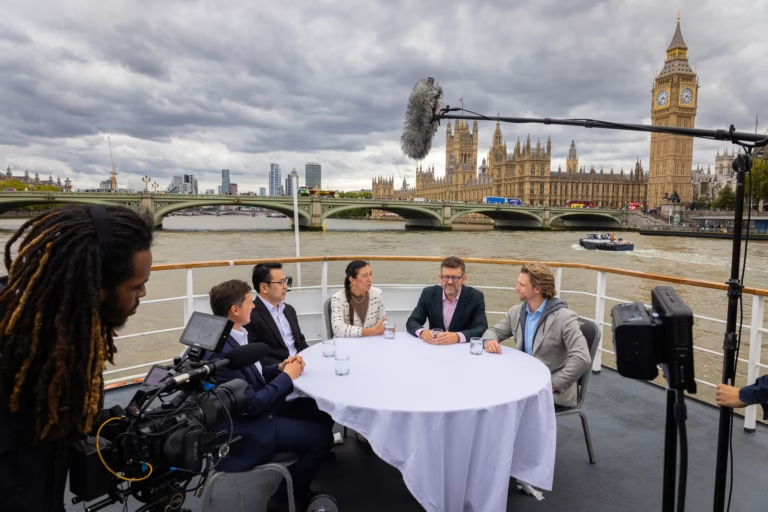
Filming on the River Thames can deliver extraordinary footage, but it is not a simple river location. The tidal Thames is a working waterway with passenger traffic, freight movements, tourism pressure and strict navigation rules, which means commercial filming needs planning, permissions and the right marine support.
Cinecraft helps productions work on the Thames in two ways. If you already have your own crew, we provide the boats, safety support and marine coordination needed to carry out the shoot. If you do not have your own crew, we can also provide the filming itself, along with the vessels and support team required to deliver it.
This page explains how Thames filming works, what the Port of London Authority expects, when a Notice to Mariners may be needed and which vessel type is right for each kind of production. It is written for location managers, producers, agencies and production teams who need clear answers before the shoot moves into planning.
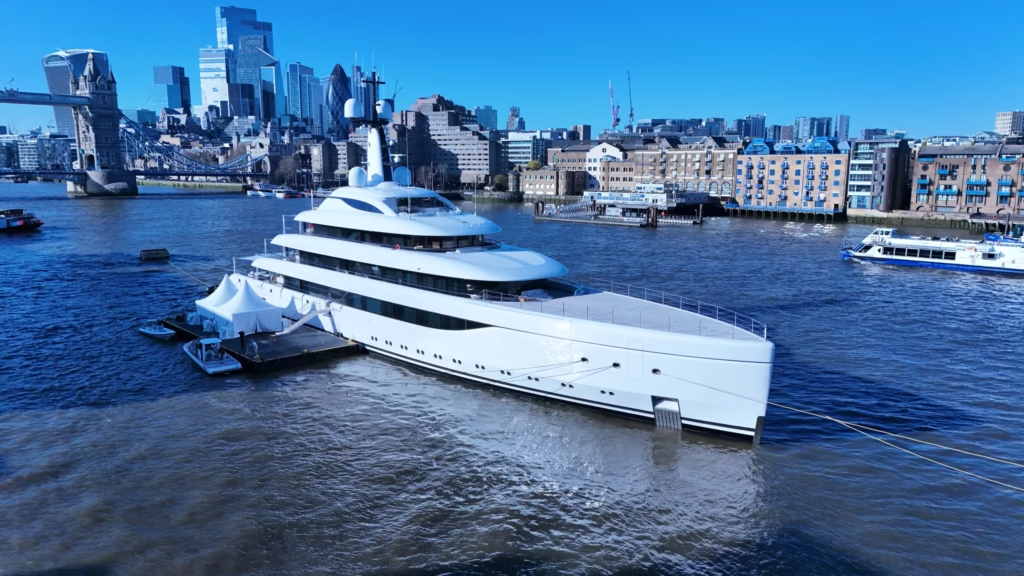
The Thames is one of the most recognisable filming locations in the UK, but it is also one of the most operationally demanding. If your production is going to work on the tidal Thames, you need to think about permissions, access, vessel selection, drone work, crew movement and safety before you lock the schedule.
Cinecraft’s role is to make that process simpler. We can supply film boats, camera boats, drone boats, safety boats and marine coordination for productions that need the river to work as a filming environment rather than just a backdrop.
If your team already knows what it needs, great. If not, this guide walks you through the choices and then links you into the right service pages.
The Port of London Authority states that all commercial filming activity and all commercial still photography on the tidal Thames require a filming licence. That includes filming involving boats and vessels, as well as filming on the foreshore, piers and other structures in the river.
The PLA also explains that filming and photography are licensed to help ensure activity is carried out safely and does not interfere with operations on the tidal Thames. In practice, that means your application should clearly set out what you want to film, where you want to film it, how the vessel will work and what the production needs from the river.
For producers, the smart approach is simple: do not treat the permit as paperwork at the end of the process. Treat it as part of the shoot design. If you already know you will need a boat, a drone platform or safety cover, build that into the production plan early and keep the marine operator involved from the beginning.
A strong Thames filming application should usually answer these questions:
The PLA says licence applications must be submitted using its application form, which asks for the key information needed to assess the request. The clearer your brief, the easier it is to scope the operation and reduce avoidable delays.
Some shoots are straightforward. Others need the river itself to be managed more carefully. The PLA states that particularly complex filming or events may require river traffic to be controlled for a limited period, and in those cases it may issue a Notice to Mariners so river users are aware of the operation.
The PLA also says it may need to supply launches to patrol or control traffic on scene, and that the costs of those activities must be borne in full by the film maker or event producer. That means complex Thames filming is not just about getting permission; it is about budgeting for the operation properly.
If a shoot affects navigation, creates a working zone on the river, or needs controlled movement around camera positions, you need marine coordination rather than simple boat hire. That is where Cinecraft’s marine coordination service becomes useful.
For producers, a Notice to Mariners is essentially a formal warning and operational notice to the river. It exists so commercial shipping, passenger craft and other river users are aware that something unusual is happening on the water.
In practical terms, this can affect:
The more your shot design interacts with the river, the more likely it is that a Notice to Mariners or traffic management support will come into play. That is why the best Thames shoots are designed by people who understand both filming and navigation.
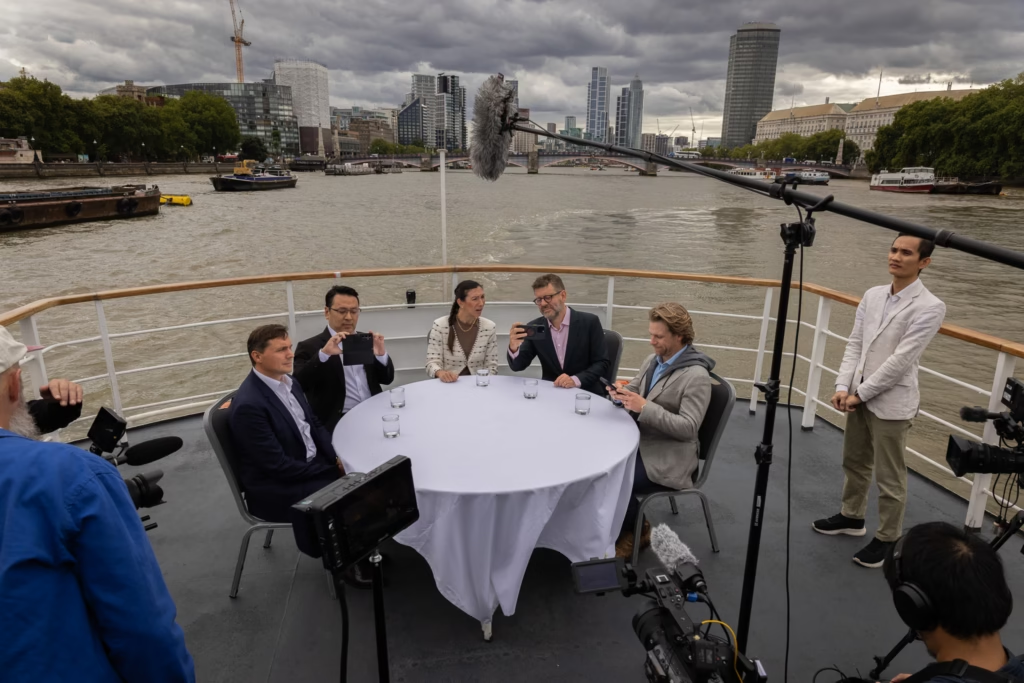
Not every boat is right for filming. A tourist boat and a dedicated filming platform are not the same thing, and the difference matters when the camera starts rolling. General passenger layouts, fixed seating and poor deck access can make filming harder than it needs to be.
A camera boat is a working platform. It needs to be stable, practical and able to support camera movement, crew movement and the specific demands of a shoot.
Use a camera boat when you need:
Cinecraft’s fleet is built around vessels that can be adapted for filming, which makes camera work on the Thames much more manageable than trying to repurpose a leisure vessel.
A drone boat is a vessel designed for over-water launch and recovery, and it becomes especially valuable where bank access is poor or the drone needs to track moving river action from a mobile platform.
Use a drone boat when you need:
Cinecraft already supports Thames drone filming and drone boat charter for shoots that need the river as part of the aerial plan rather than just the backdrop.
A hero boat is the vessel that appears on camera. It might be a workboat, a yacht, a RIB or another characterful vessel depending on the scene.
Use a hero boat when the vessel itself is part of the story or the visual identity of the shot. In many productions, the hero boat and the camera boat are separate vessels because one is there to be filmed and the other is there to film.
A safety boat exists to protect the people and the production. It helps manage standby cover, rescue readiness and the overall safety envelope around work on or near the water.
Cinecraft already provides film water safety services for shoots on the Thames and elsewhere, including support vessels and crews for risk management and emergency response. For many productions, this is not an optional extra; it is a core part of a compliant marine shoot
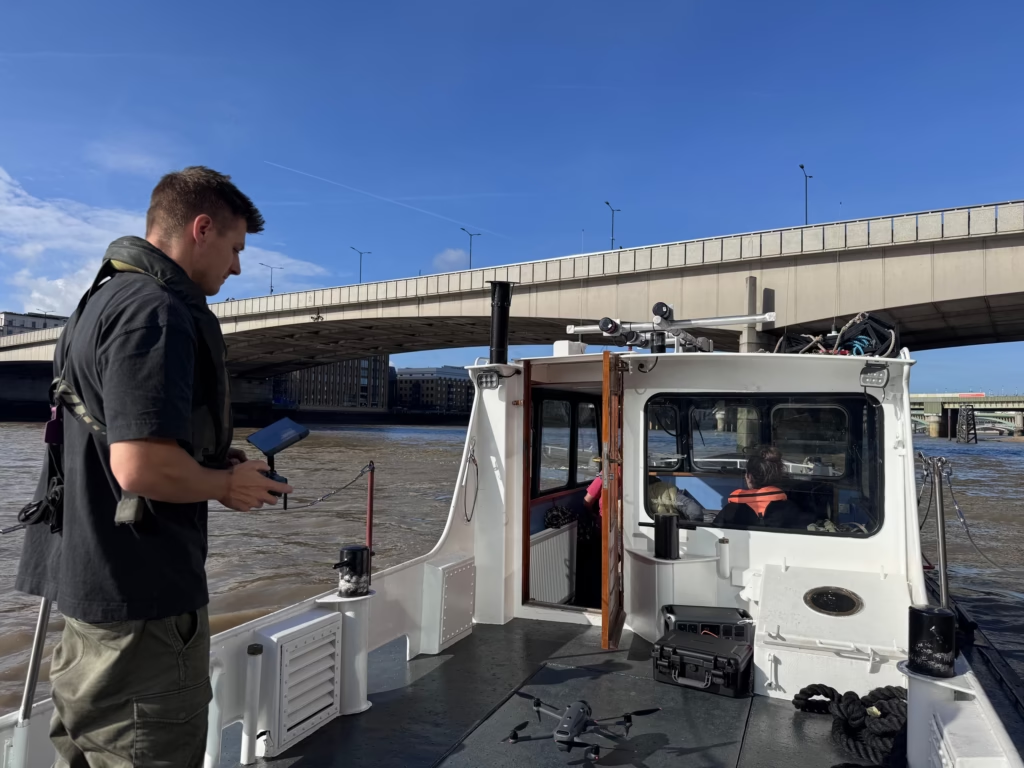
Drone filming on the Thames is powerful because it gives you the river, the skyline and the architecture all in one frame. It is also complicated because airspace, river safety and operating permissions all overlap.
Cinecraft already supports drone filming on the River Thames with permit assistance, marine coordination and dedicated boats for over-water work. The Thames drone page also notes the need for PLA filming licences and wider airspace coordination, including restricted zones over central London.
If you have your own drone team, we can provide the right vessel and marine setup to support them. If you do not, we can handle the filming for you as part of a full-service package.
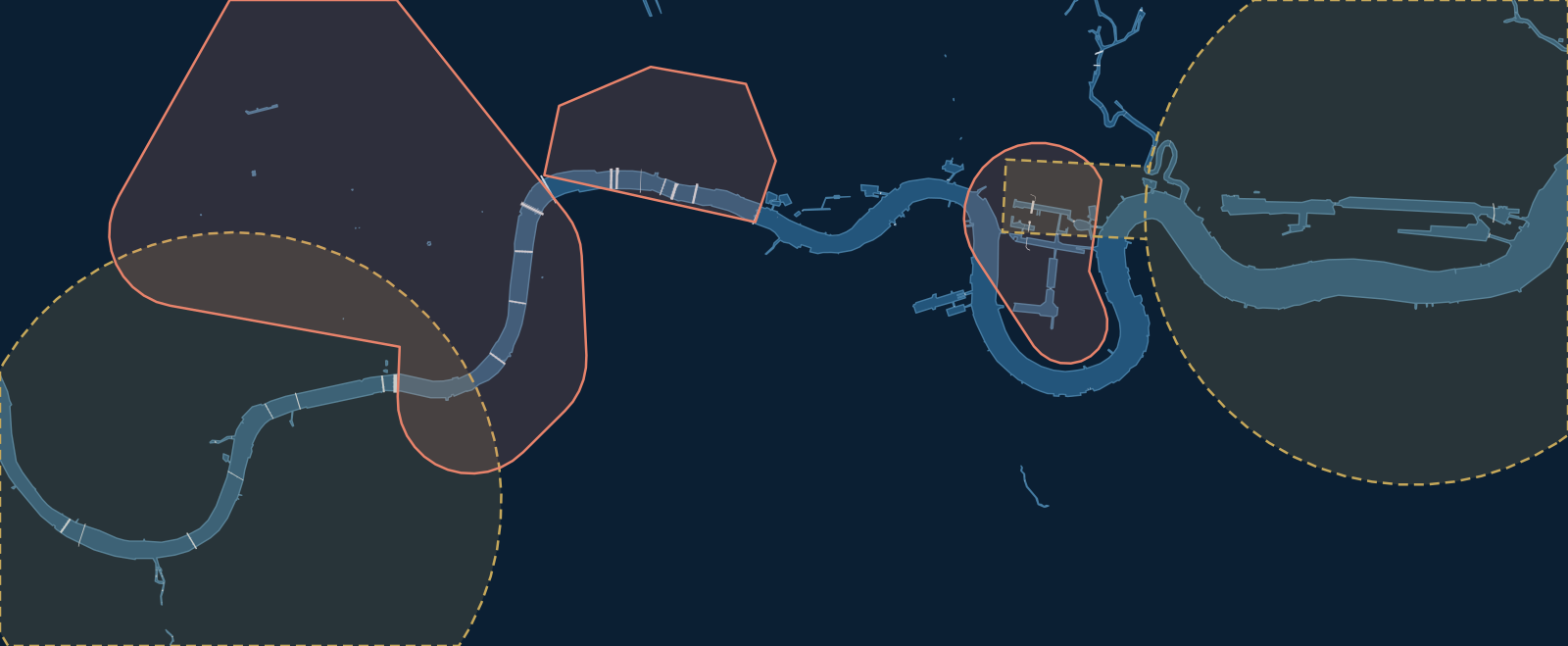 London Heliport zoneR157 Hyde ParkR158 City of LondonR159 Isle of DogsLondon City Airport zonePutney BridgeBattersea Power StationWestminsterTower BridgeGreenwichThames BarrierWoolwich
Not every client wants dry hire. Some need a provider that can handle the entire job.
If you do not have your own crew, Cinecraft can supply the vessel, the marine support and the filming itself. That means the production does not need to coordinate separate suppliers for the boat, the drone, the camera crew and the on-water logistics.
This is especially useful for agencies, brands and producers who want the Thames footage without building the marine production from scratch. Cinecraft can act as the operational bridge between the river, the vessel and the creative brief.
The PLA’s filming guidance makes clear that filming on the Thames must be carried out safely and without interfering with river operations. That means risk assessments, crew briefings, safe embarkation points, deck discipline, tidal timing and emergency planning all matter.
Good Thames filming is not just about what gets captured on camera. It is about how efficiently and safely the operation is managed on the water. Cinecraft’s film water safety and marine coordination services are designed to support that process from pre-production through to shoot day
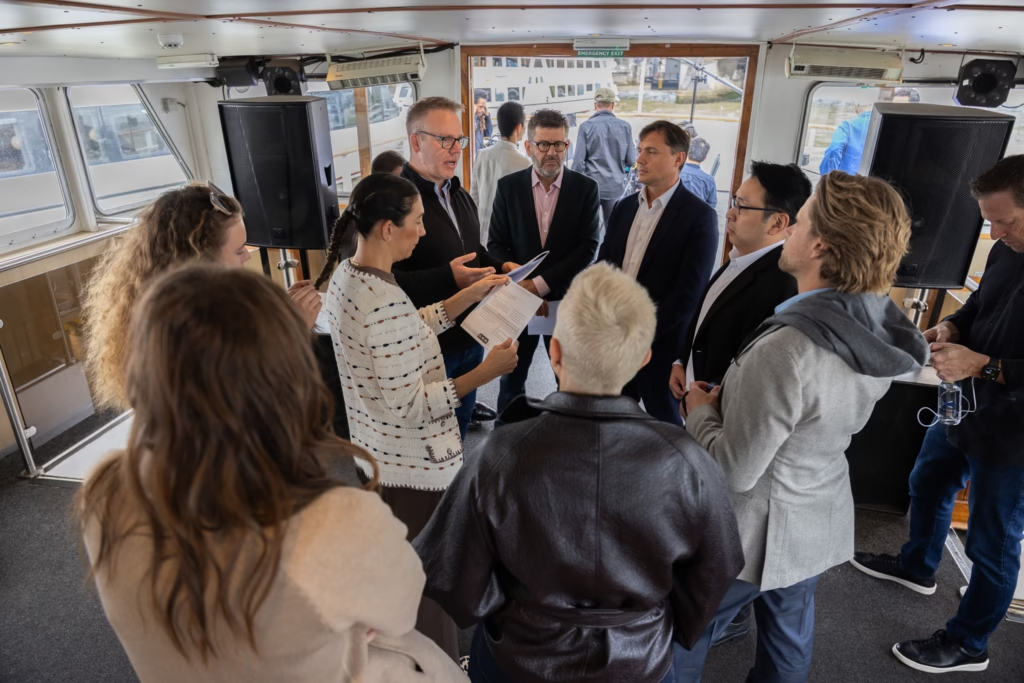
Cinecraft is the right fit when the shoot needs more than a boat. We help productions that need:
If you are bringing your own crew, we can support the production with the right vessel and marine setup. If you need us to handle the filming too, we can do that as well.
Yes. The PLA states that all commercial filming and all commercial still photography on the tidal Thames require a filming licence.
Yes, but filming from a boat still requires the right PLA permission and the right operational setup.
It is a formal notice used to warn river users about activity affecting navigation. The PLA says one may be required for more complex filming or events.
It is a Thames-specific qualification for commercial skippers which tests their knowledge on the tricky stretch of the Thames running through central London, and the PLA states that applicants need 60 days of logged local experience before assessment or revalidation.
Yes. Cinecraft supports Thames drone filming with vessel support, permit assistance and marine coordination.
No. Cinecraft can also provide the filming itself if you do not have your own crew.
Planning a shoot?Tell us where on the river and when. We reply within the hour, 8am to 8pm, 7 days.
Plan a Thames shootor call 020 3039 3931