
Speed. From Wandsworth Bridge down to Lambeth Bridge is one of the two stretches where boats with a PLA Certificate of Compliance can go above 12 knots. Our film boat holds one, so fast tracking shots past the power station are possible.
The light. The power station’s river front faces north across the water, so it sits in shade for much of the day. Early and late in summer, and after dark when it is lit, are the strongest times.
The heliport. The London Heliport is on the Battersea bank upriver, and helicopters use the river as their route in and out, so drone work here is planned around its zone.
The houseboats. Chelsea’s houseboats are people’s homes, so we keep the wash down and the cameras respectful when we film past them.
On the water. Commercial filming on the tidal Thames needs permission from the Port of London Authority, and we apply for it as part of the job.
In the air. The London Heliport’s flight restriction zone covers this stretch, and from Battersea Power Station downstream so does the Hyde Park restricted area (R157), so drone flights need the heliport’s permission and, there, NATS permission too. We handle both.
On land. The power station and its estate are privately owned, so filming on the estate or taking off from it needs the owners’ permission. Battersea Park has its own rules too.
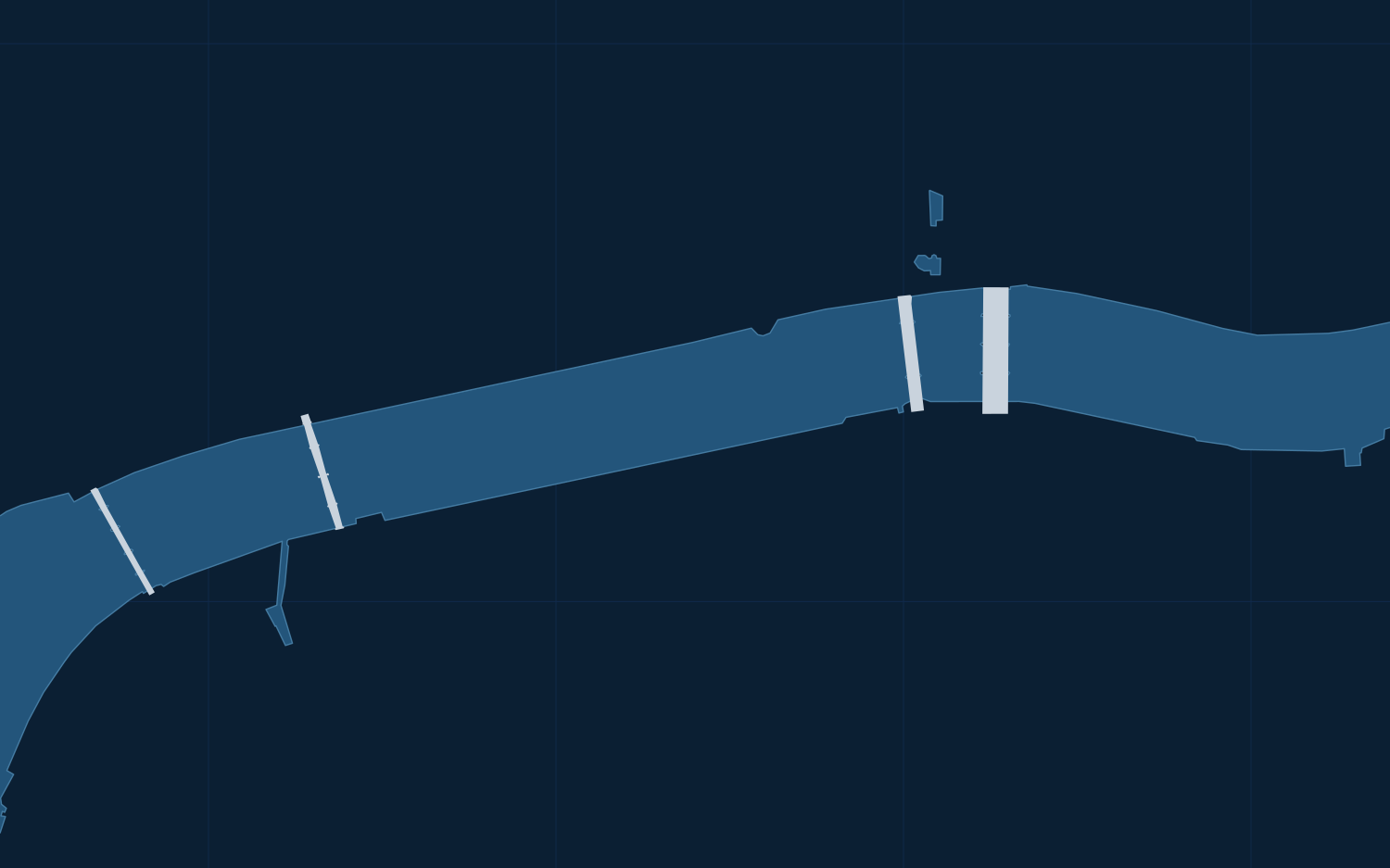 3Battersea Power StationAlbert BridgeChelsea Bridge
Yes. The river gives you the whole building over the water, and our film boat can track past it at speed on this stretch.
Only with approvals. The London Heliport’s zone covers this stretch, and Battersea Power Station also sits inside the Hyde Park restricted area (R157), so we apply to the heliport and through NATS, and plan the flight around the heliport’s traffic.
After dark, when its lights trace the outline of the bridge. Our boats run at night, so dusk and night shots are straightforward to plan.
At a point that suits the tide and the shoot, which we confirm with the call sheet.