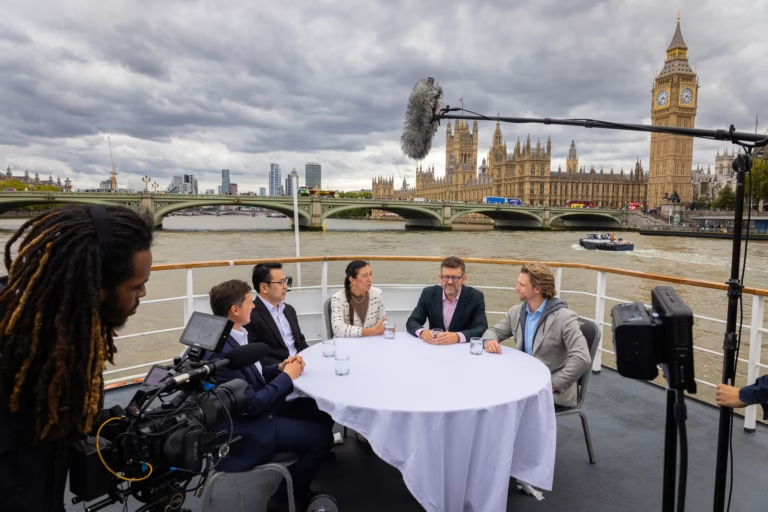
By the Cinecraft team: skippers and drone pilotsFacts checked 7 Oct 20267 min read
At a glance
The PLA looks after navigation on the tidal Thames, from Teddington to the estuary, and it licenses filming so that shoots are safe and stay out of the way of the passenger boats, freight and leisure traffic that use the river. In its own words, a permit is required for all commercial filming, photography and event activity on the tidal Thames. That covers:
If we’re the production company on the job, we apply. We write the application, send the plans and answer the PLA’s questions until the permit comes through.
If you’re the production company, you apply and we help you build the application. You get our RAMS, written for the river, to build yours from, our river knowledge for the plan, and our good track record with the PLA behind you.
Either way, our in-house team can help you get every other permission the shoot needs, from landowners and piers to the airspace for a drone.
The PLA wants to know exactly what will happen on its river, and an application that answers its questions up front gets fewer questions back. Ours include:
For a drone, the PLA also asks for the exact take-off spot (a what3words address is best), the CAA licence, a risk assessment, a flight plan and the drone’s specification.
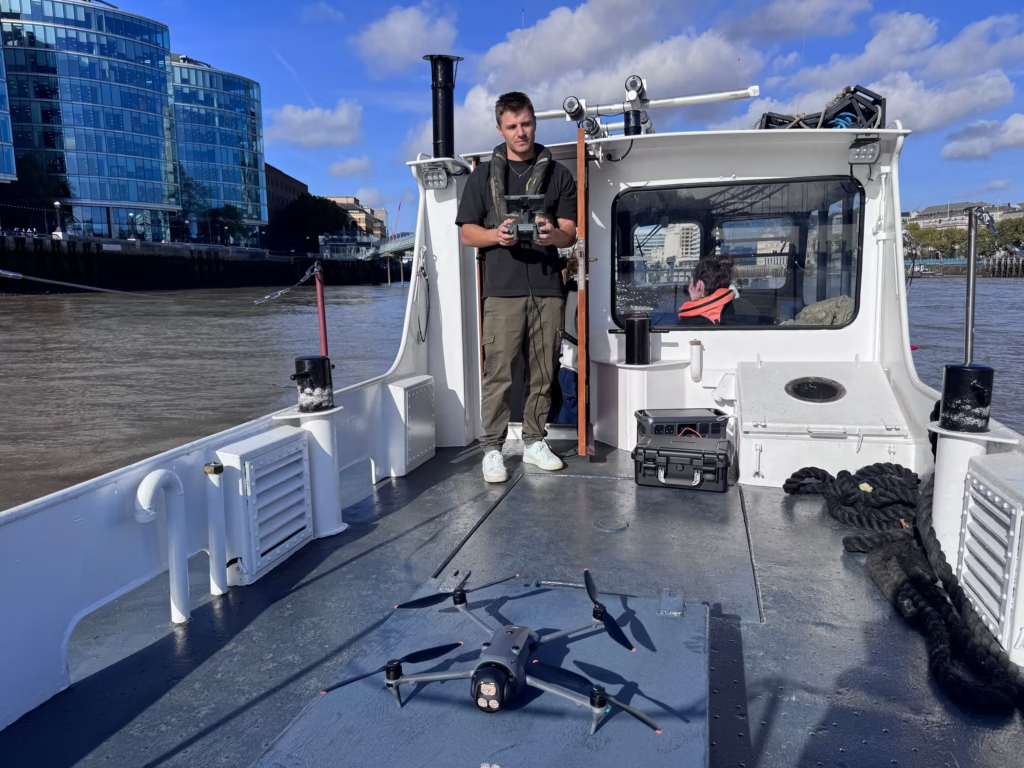
The PLA sets its notice periods by the size of the shoot:
Late applications pay a late fee. A drone flight from a boat or the foreshore needs the PLA’s drone application as well, with at least three working days’ notice. Summer is the PLA’s busiest time, so apply as early as you can then.
For the airspace, tell us as early as you can. We hold long-standing permissions across London, so we can often fly at short notice.
You tell us the shoot
The shots, the dates, where on the river and who is on board. The more we know, the stronger the application.
We plan it on the river
The boats, the positions and the timings, worked out against the tide and the traffic, with the RAMS written for this stretch of river.
The PLA application goes in
The filming permit, plus the drone application if a drone is flying from a boat or the foreshore.
Airspace for the drone
Permission from the airport or heliport inside their zones, and through NATS inside the restricted areas.
Landowners and piers
Consent for any pier, pontoon or riverside spot the shoot uses.
The PLA answers
It confirms the permit and sets the fee. If the shoot affects other river users, it may issue a Notice to Mariners or put a harbour launch on scene.
Shoot day
Drone flights inside the zones are cleared with air traffic control on the day, before take-off.
Every filming job on the Thames needs marine RAMS, and they are written to the tide on the day. Change the date and the tide times change, so the RAMS are rewritten and the application goes back to the PLA. Settle the date before the application goes in and everything moves faster.
Most of the river through central London sits inside protected airspace, and the map shows where. From Putney to Battersea the river is inside the London Heliport’s flight restriction zone. From Battersea to Westminster and the London Eye it is inside the Hyde Park restricted area (R157), and from Blackfriars to Tower Bridge inside the City of London restricted area (R158). The Isle of Dogs has its own (R159), and from Canary Wharf past the O2, the Thames Barrier and Woolwich the river is inside London City Airport’s zone.
Inside an airport or heliport zone, a drone needs permission from that airport or heliport. Inside the restricted areas it needs permission through NATS, the UK’s air traffic service, and the flight is cleared with air traffic control on the day. Add the landowner for any take-off spot on land, and the PLA for anything flown from a boat or the foreshore. We handle every one of them as part of the job. The airspace guide goes through each zone in more detail.
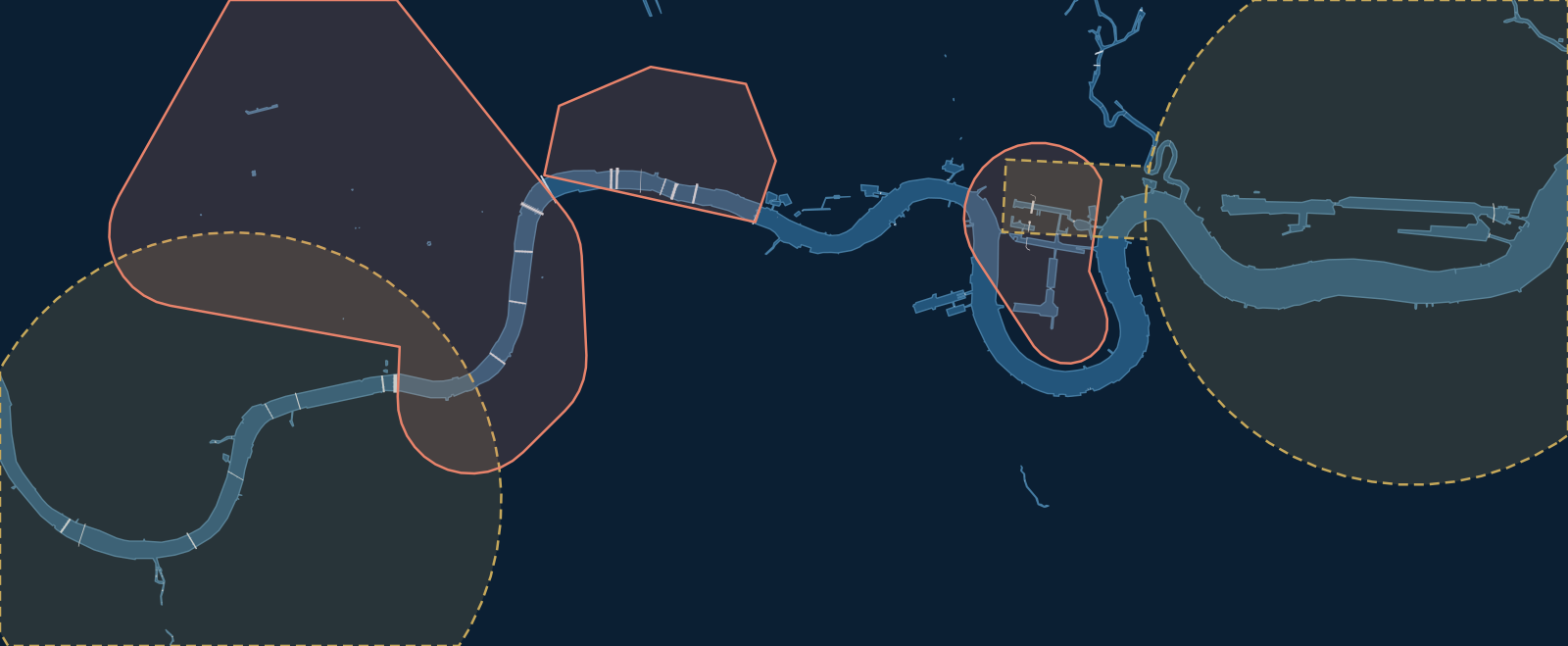 London Heliport zoneR157 Hyde ParkR158 City of LondonR159 Isle of DogsLondon City Airport zonePutney BridgeBattersea Power StationWestminsterTower BridgeGreenwichThames BarrierWoolwich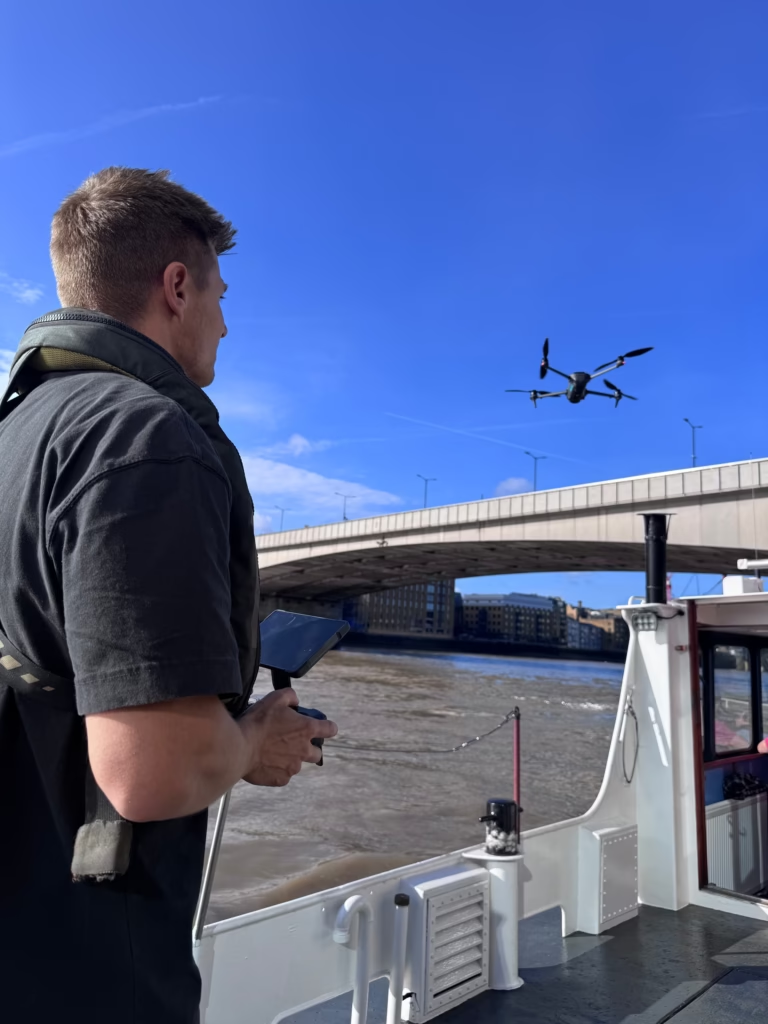

Most delays start with the application, not the PLA:
On that last one: the PLA can’t close the river, but it can restrict traffic for short periods, which takes a lot of planning, and it only does so for safety on the water, never to keep a shot clean for continuity. Shoots with pyrotechnics or special effects, drones, diving, stunts or anything that disrupts the river get extra scrutiny and safety checks. Scuba diving isn’t allowed on the tidal Thames at all.
The PLA sets the licence fee once it has your application, to suit the scale, length and complexity of the shoot. If the shoot affects other river users, the PLA may issue a Notice to Mariners or put a harbour launch on scene, and the production pays the full cost of both.
In our experience the PLA charges for at least four hours, so a very short shoot costs as much as a half day, and it usually pays to plan more time on the water rather than less.
Other permissions carry their own fees, the London Heliport’s among them. We list every fee on the quote.
If we’re the production company, we do. If you are, the application is yours and we help you build it, with our RAMS, our river knowledge and our track record with the PLA behind it.
We plan for both. Dates can usually be moved up to five days before, and if we call a shoot off because it isn’t safe to take the boats out, we agree a refund or a credit note. The details are in your quote terms.
The permit covers the shoot as applied for, so put every boat in the application and say what each one does: the camera boat, the picture boat and any safety boat. If anyone films from the picture boat, say so.
You can fly from a pier or the riverside where the owner agrees, and we have access to some good spots. The airspace rules are the same, and the PLA still needs telling at least three working days before a drone flies over the river. Its permission is needed for any take-off or landing on a boat or the foreshore.
It can usually be done, but each change means new tide times in the RAMS and another round with the PLA, so fix the date as early as you can.
Planning a shoot?Tell us where on the river and when. We reply within the hour, 8am to 8pm, 7 days.
Plan a Thames shootor call 020 3039 3931